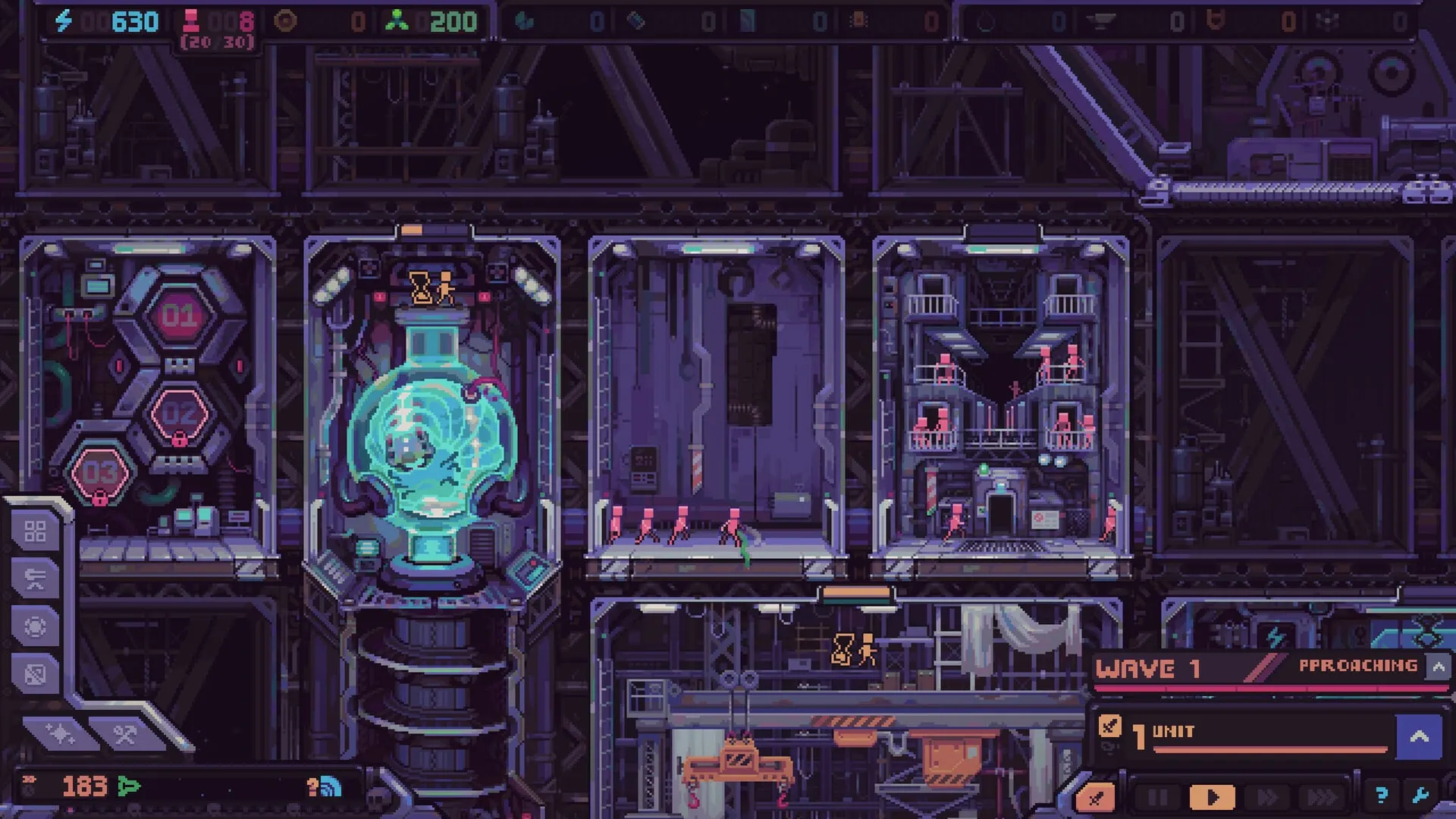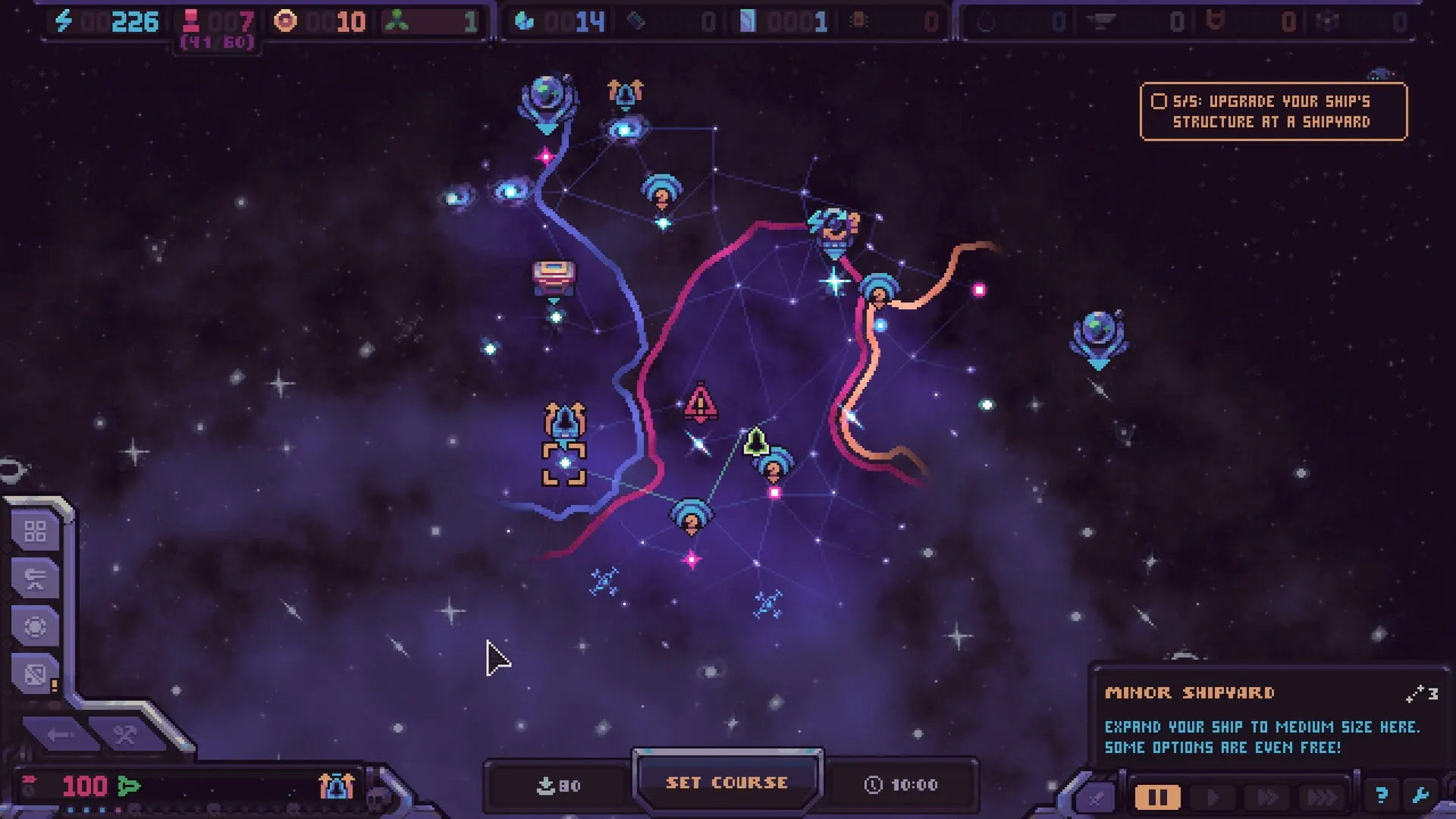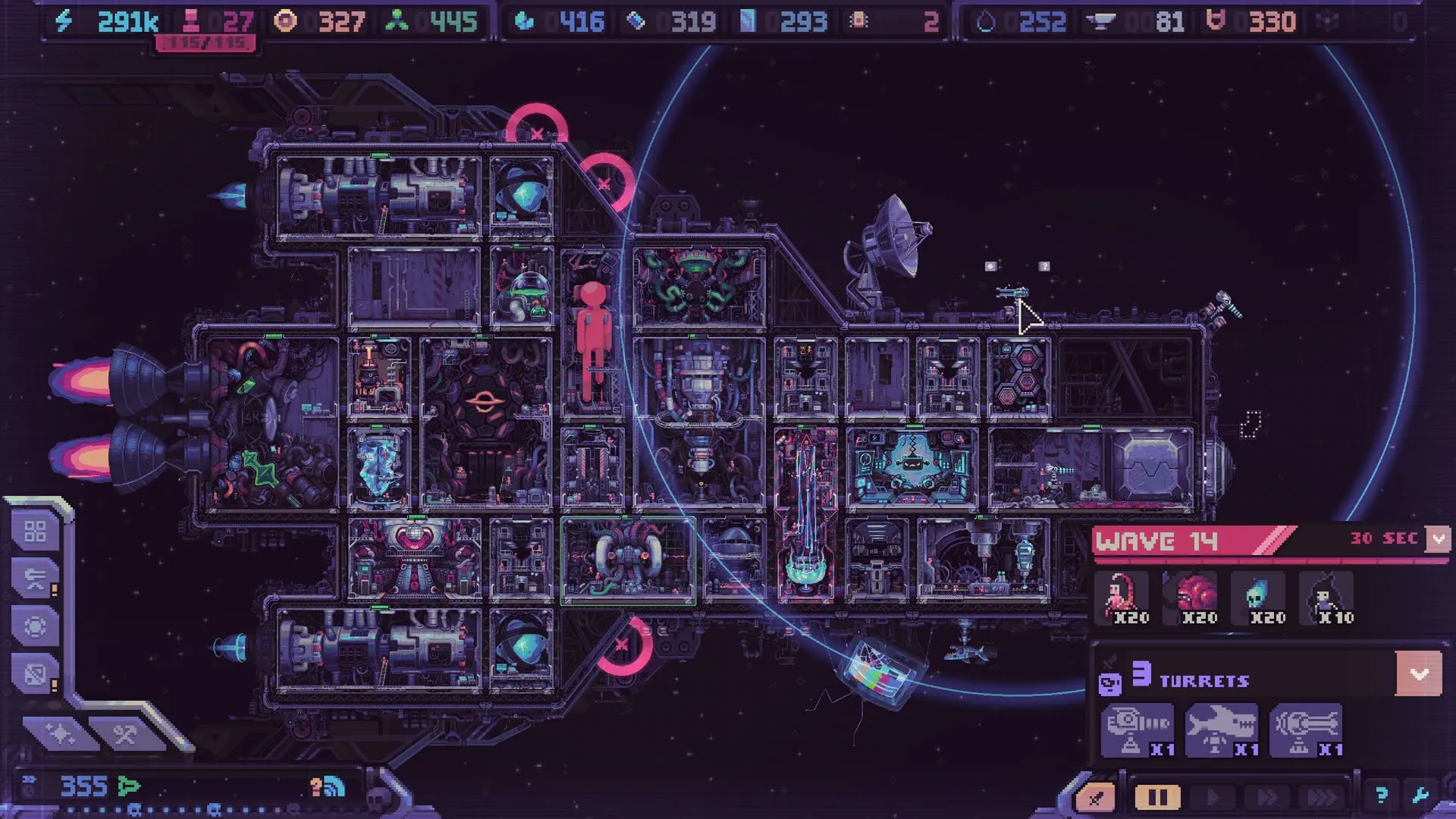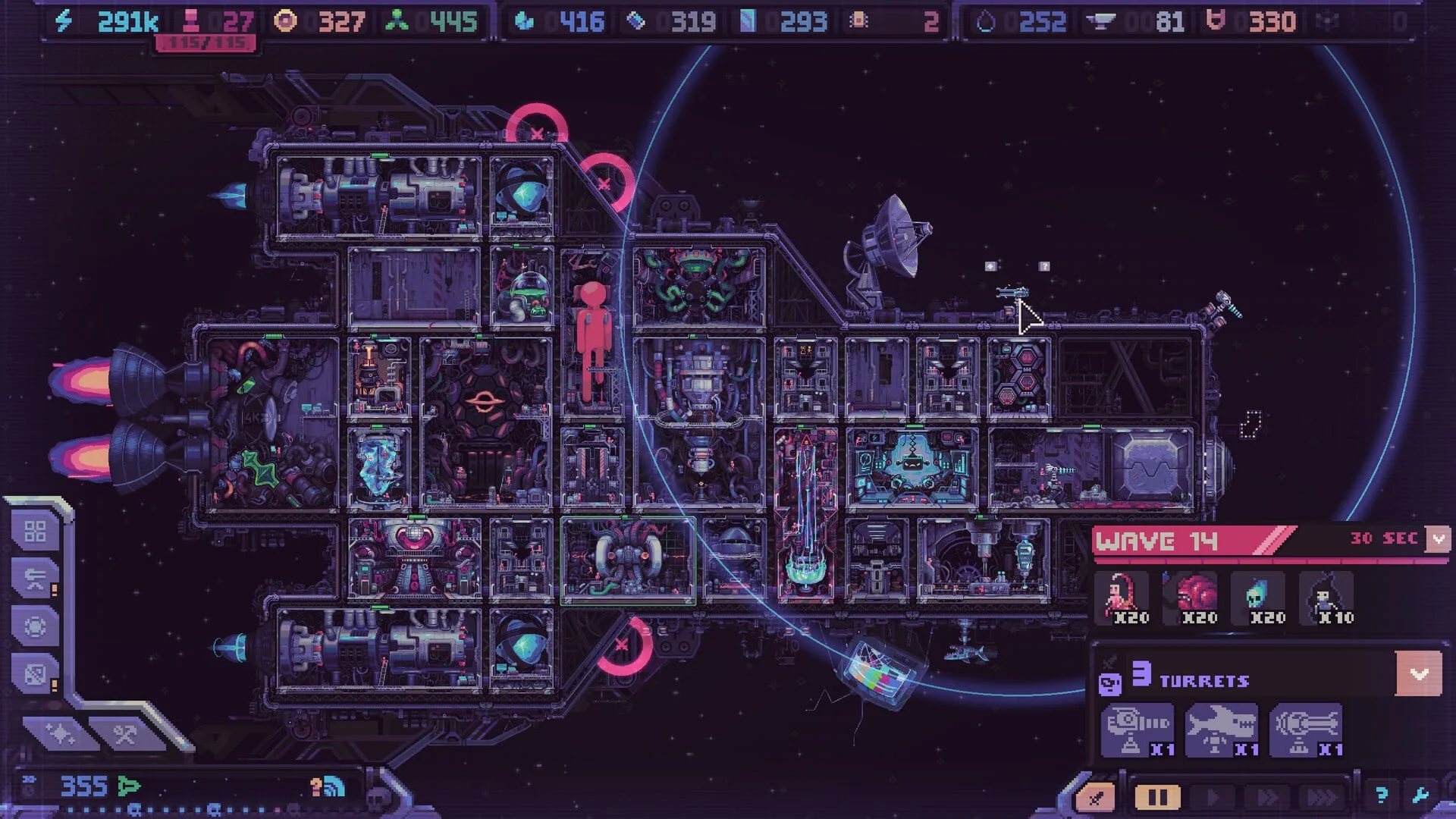
Hull Rupture ships are more than starting layouts. The game releases with three ships. The demo gives you one: the Izumo. The other two are part of the full-game promise, but their names and exact systems have not been published. That makes this archive a confirmed snapshot, not a finished tier list.
Ship overview
| Ship | Status | Known identity |
|---|---|---|
| Izumo | Demo + confirmed | Small, maneuverable, salvaged. Fits a low-mass, high-speed playstyle. |
| Second hull | Unannounced | Different layout, systems and loss threshold promised. Name and details unknown. |
| Third hull | Unannounced | Same caveat. No public stat block or name. |
The Izumo
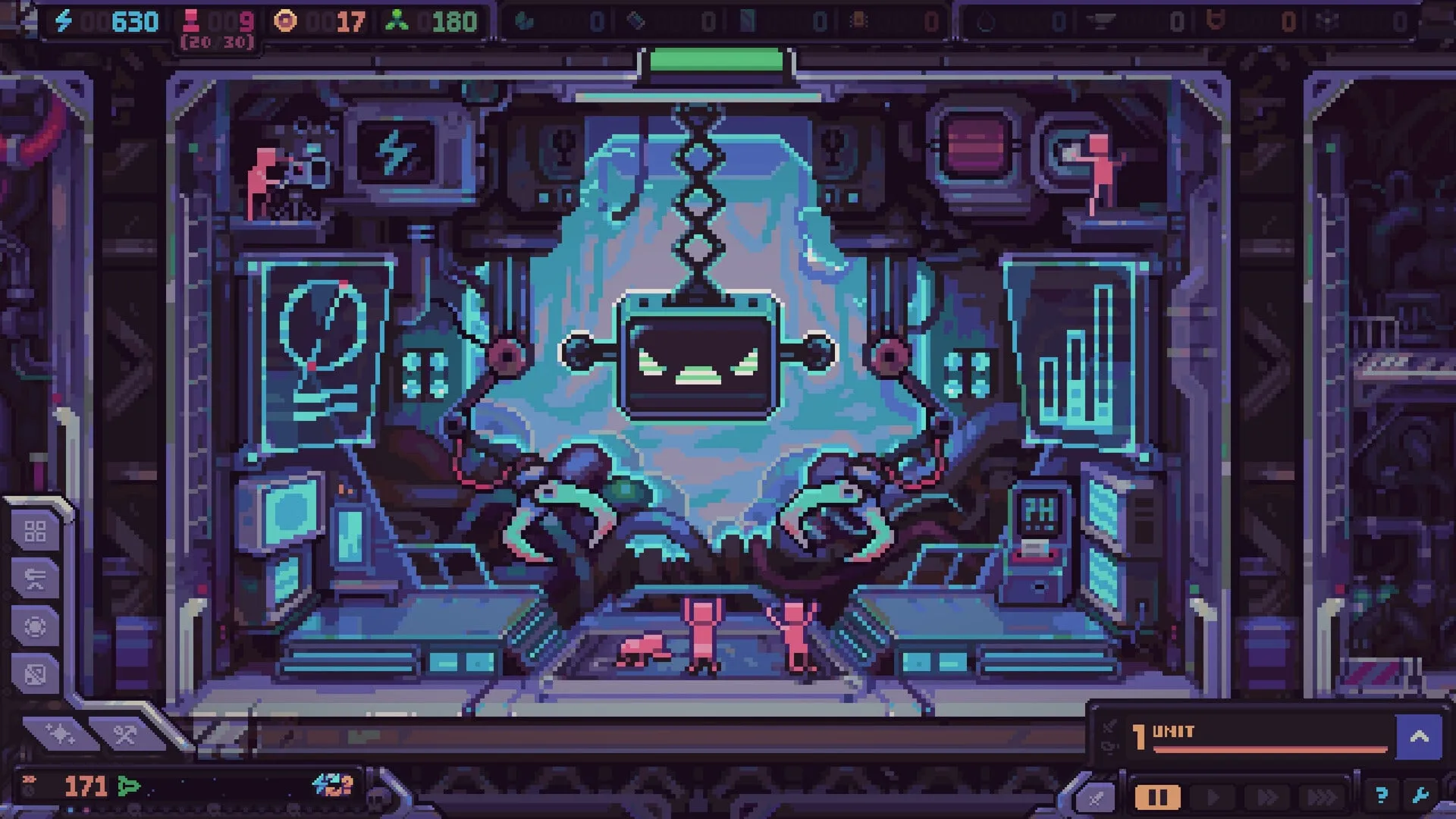
The Izumo is described as a small, maneuverable ship made from random stuff found lying around when Earth was destroyed. “But hey, it works.” It is the hull the demo uses for its tutorial and Classic runs, which makes it the baseline for almost every guide on this site.
Mechanically, the Izumo is the natural home of the low-mass sprint. One of the three starting ships is explicitly designed around keeping mass low and visiting as many destinations as possible, and the Izumo’s description fits. That playstyle trades floor space and heavy production for travel speed, more events and a wider choice of routes.
To get the most from the Izumo, build a compact production core, avoid expanding just because a block is offered, and invest in engines only when a route plan demands it. Use the galaxy map guide to convert speed into modifiers, and the Hull Construction guide to keep the interior efficient.
How hulls differ
The store says “different ship models further influence how situations unfold, as layouts, systems, and loss thresholds vary between hulls.” That is the most important sentence for ship evaluation. A hull is not just a starting blueprint; it changes:
- Starting layout: where the Airlock, engines and module slots sit, and how aliens approach.
- System access: which production or defense options are natural, and which require a detour.
- Loss thresholds: how much economic or crew damage the hull absorbs before the run ends.
- Risk profile: whether a fast, event-heavy route or a slow, industrial route is more efficient.
This is why “best ship” questions are premature. A hull with a strong economy but a fragile Airlock wants different routes and defenses than a hull with a long external approach but limited production space. The right ship depends on the mode and the player.
The other two hulls: what we know (and don’t)
As of October 30, 2026, Konfa Games has not published the names, layouts or stats of the other two ships. The store confirms there are three. The developer has said they change layouts, systems and loss thresholds. That is the entire public record.
We will not fill this gap with invented names. When the release build is available, this page will be updated with confirmed hulls and playstyle notes. Until then, any “Hull Rupture ship tier list” that ranks three named ships is speculating.
Watch the launch build
Ship unlocks, starting layouts and loss thresholds may change between the demo and the November 4 release. Re-check the hull selection screen after launch before committing to a long-term plan.
Choosing a hull: the right questions
- How much hull space does the run need? A heavy production plan wants room; a fast route plan wants less mass.
- How forgiving is the loss threshold? If you expect to leak, a hull that survives damage is worth more than a glass cannon.
- Where is the Airlock? A long approach is a defensive asset; a short one demands more turret coverage.
- What is the engine situation? A hull that starts slow needs fuel and engine investment before it can exploit the map.
- Which mode are you playing? Cursed mode’s human currency and Conquest’s extra fighting change which hull traits matter.
Next step
Read the ships and modes guide for the full mode breakdown, or the beginner guide to learn the Izumo’s first-run priorities.